 Paint Color Lab
Classic Gray vs Pale Oak
Classic Gray (LRV 73.67) is lighter than Pale Oak (LRV 68.64), a 5.03-point difference; ΔE 1.8.
Side by side
| Classic Gray | Pale Oak | |
|---|---|---|
| LRV | 73.67 | 68.64 |
| Undertone | Warm (yellow) | Warm (yellow) |
| Hex | #E3E0D7 | #DDD9CE |
| Depth | Light | Light |
Color difference between them: ΔE 2000 = 1.8 (very close).
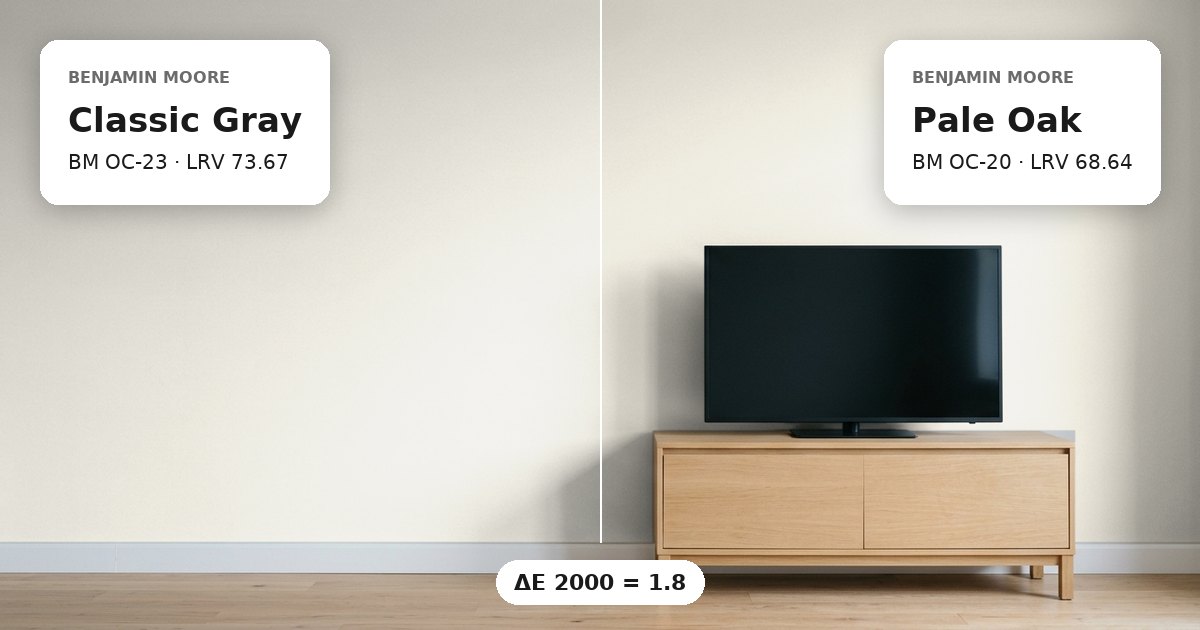
Classic Gray vs Pale Oak: the measured difference
Classic Gray vs Pale Oak compares two light colors with a ΔE 2000 of 1.8. A difference between 1 and 2 indicates a very close match, though the distinction may become apparent when samples sit side by side. Benjamin Moore Classic Gray (OC-23) has a hex value of #E3E0D7 and is classified as a light white. Benjamin Moore Pale Oak (OC-20) has a hex value of #DDD9CE and is classified as a light greige. Both have warm yellow undertones, so their undertone direction is similar. However, their recorded hex values and lightness measurements differ. On adjoining walls, the colors may create a subtle but visible change, rather than a strong contrast. The shift from a white classification to a greige classification also provides useful context when considering the pair. Test both colors in the same room, because lighting and surrounding finishes can affect how clearly their differences appear.
Lightness and depth
Classic Gray has an LRV of 73.67, while Pale Oak has an LRV of 68.64. Their gap is 5.03 LRV points, with Classic Gray reflecting more visible light according to the measurements. LRV describes the amount of visible light a surface reflects; higher values generally indicate a lighter color. Both paints are classified as light, but Classic Gray has the higher reading. Therefore, it may look brighter on the wall, while Pale Oak may appear somewhat deeper beside it. The difference can help distinguish the two colors across adjoining surfaces, even though their ΔE indicates a close match. Actual brightness depends on the amount and direction of available light, as well as the colors around the painted area. To assess the contrast accurately, compare large samples under the same conditions rather than judging each color in a different room.
Undertones and where each works
Classic Gray and Pale Oak both have warm yellow undertones. Their main distinction in the supplied data is their classification and measured lightness: Classic Gray is a light white, while Pale Oak is a light greige with a lower LRV. Cooler north-facing daylight can make warm undertones less apparent, while warmer south-facing light may emphasize yellow. These are general tendencies rather than fixed predictions. Classic Gray may be useful where a lighter measured color is desired, while Pale Oak offers a slightly deeper alternative. For trim, consider whether the contrast should be clear or subtle. A lighter trim can separate either wall color, but its own undertone will influence the result. In adjoining rooms, the pair can provide a gradual shift without introducing a different undertone direction. Place samples near doorways, windows, and existing trim, then inspect them throughout the day before choosing where each color belongs.
Before you buy, compare a physical sample with the swatch on Benjamin Moore’s page for Classic Gray and Benjamin Moore’s page for Pale Oak.
Values from each brand's own color page; ΔE and undertone are our calculations. See methodology. Not affiliated with any paint brand.