 Paint Color Lab
Zen PPG 1040-1
PPG Zen (PPG1040-1) has an LRV of 69 and is closest to Behr Etched Glass (MQ3-27), with ΔE 3.6.
- LRV
- 69light reflectance, 0–100
- Undertone
- Cool (blue)calculated from Lab
- Hex
- #CFD9DE
- RGB
- 207, 217, 222
- CIE Lab
- 86.1 / -2.4 / -3.6D65, from hex
- Depth
- Light
Closest matches to Zen in other brands
Ranked by CIEDE2000 colour difference (ΔE). Under 1 is near-identical; under 2 is hard to tell apart on a wall.
| Color | Brand | LRV | ΔE 2000 | How close |
|---|---|---|---|---|
| Etched Glass Behr MQ3-27 | Behr | 75 | 3.6 | close, visible side by side |
| Topsail SW 6217 | Sherwin-Williams | 75 | 4.0 | similar, clearly different |
| Light French Gray Behr 720E-2 | Behr | 61 | 4.7 | similar, clearly different |
| Nebulous White SW 7063 | Sherwin-Williams | 74 | 5.3 | similar, clearly different |
| Smoke BM 2122-40 | Benjamin Moore | 56.39 | 5.3 | similar, clearly different |
| Gravity Valspar 4005-1B | Valspar | 56.26 | 5.3 | similar, clearly different |
| Modern Gray Valspar 8005-1A | Valspar | 70 | 6.0 | similar, clearly different |
| Paper White BM OC-55 | Benjamin Moore | 74.41 | 6.4 | similar, clearly different |
Matches come from the 190 colors in our database so far, not from every color each brand makes. Try the color matcher for any hex code.
Zen on a wall
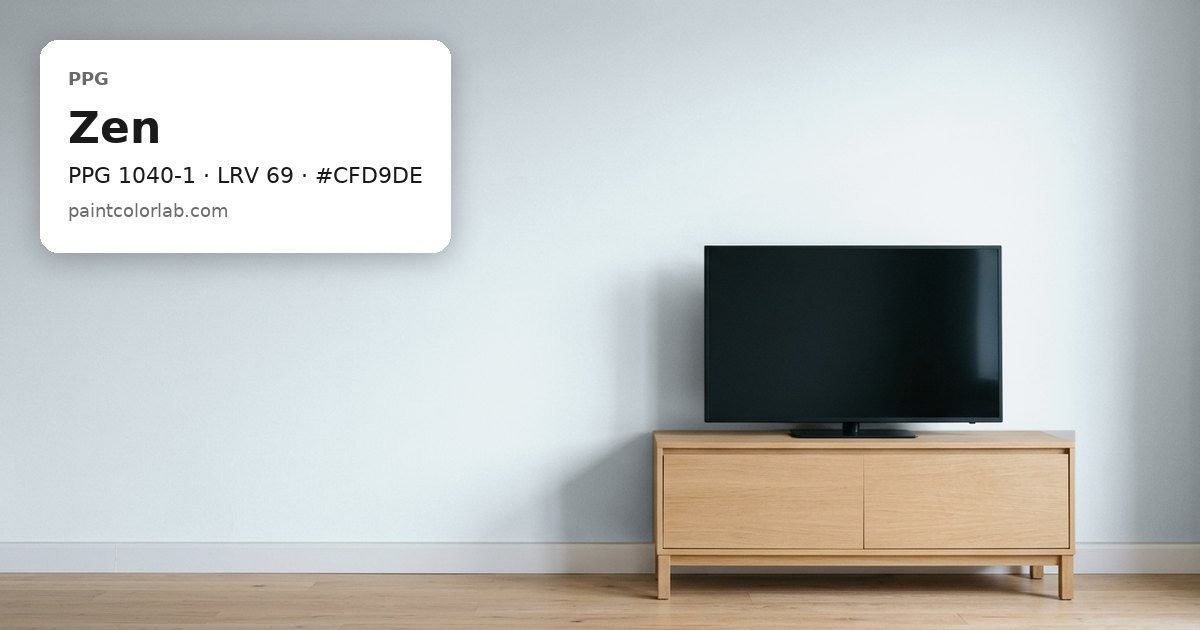
About Zen
PPG Zen (PPG1040-1) LRV and undertone
PPG Zen (PPG1040-1) has an LRV of 69, placing it in the light range. Light reflectance value measures how much visible light a surface reflects, so a higher value generally means a brighter appearance. Zen belongs to the blue color family and has a calculated cool blue undertone. This combination gives it a cool direction rather than a warm neutral appearance. In a room, its relatively high LRV can help maintain a brighter wall surface than darker blue-gray options.
Light blue colors can shift with daylight and nearby finishes. North-facing rooms often emphasize cool undertones, while warmer south-facing light can change their balance. Compare a sample with flooring and trim at different times of day, especially if nearby surfaces have yellow or beige undertones. If you want visible separation from white trim, check the contrast in both daylight and artificial light before choosing the final finish.
PPG Zen in other brands
Behr Etched Glass (MQ3-27) has an LRV of 75 and a ΔE of 3.6, making it a close but visibly different match. Sherwin-Williams Topsail (SW 6217) also has an LRV of 75, with a ΔE of 4.0. Both alternatives reflect more light than Zen. A ΔE between 2 and 4 means the colors are close but their differences can show when samples sit side by side.
Behr Light French Gray (720E-2) has an LRV of 61 and a ΔE of 4.7, so it is only similar under the stated threshold. Sherwin-Williams Nebulous White (SW 7063), at an LRV of 74 and a ΔE of 5.3, also differs visibly. LRV helps compare brightness, while ΔE provides a broader measure of color difference; neither alone guarantees an identical appearance in your lighting.
Lighter and darker PPG alternatives
PPG Aria (PPG1001-2) has an LRV of 77, making it lighter than Zen. It may suit a room where greater light reflection is a priority. PPG Delicate White (PPG1001-1), at an LRV of 88, is considerably lighter and can provide a much brighter surface. Because it belongs to a different color direction, compare undertones as well as brightness before using it alongside Zen.
PPG Elemental (PPG1011-2) has an LRV of 66, making it slightly darker than Zen. This smaller change may suit a room that needs a little more depth without moving far down the light-reflectance scale. PPG Whirlwind (PPG1013-3), at an LRV of 53, is substantially darker. It may be appropriate when a stronger difference in wall brightness is desired. Test each sample in the intended room before choosing.
Before you buy, compare a physical sample with the swatch on PPG’s page for Zen.
Similar PPG colors
More in Blue paint colors.
Hex, RGB and LRV (as published) from PPG's page for this color, checked October 24, 2026. Lab, undertone and ΔE are our calculations. Not affiliated with PPG. See how we measure colors.